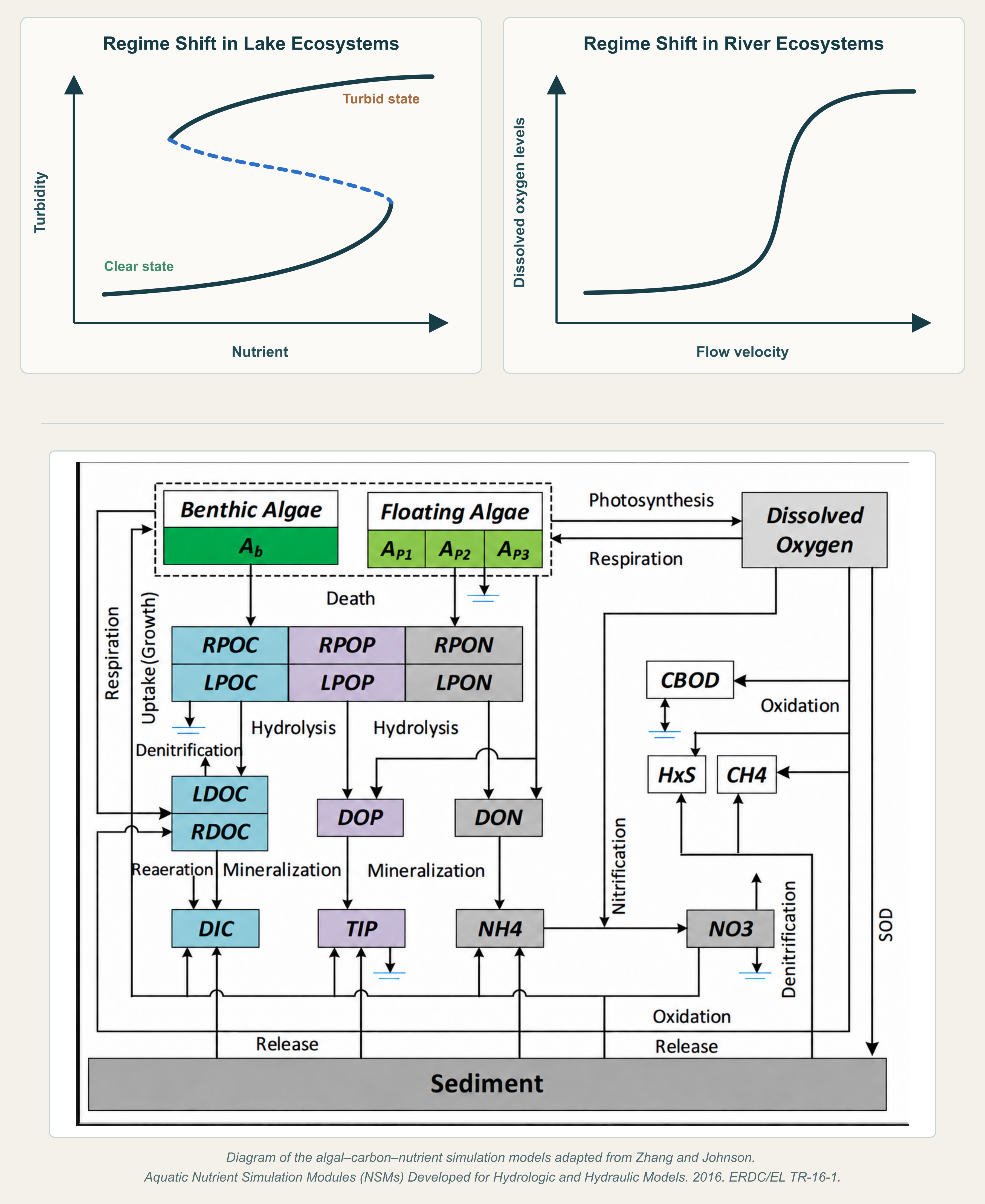
Conceptual regime shifts in lake and river ecosystems above an algal-carbon-nutrient simulation model
Click the figure to view the diagrams and model at full size.

Regime Shifts in Eutrophic River Ecosystems

Regime shifts between clear-water and turbid-water states in eutrophic lakes are well studied and are often attributed to species interactions and nutrient loading. In eutrophic rivers, however, the drivers of abrupt shifts in algal communities, dissolved oxygen, and nutrient dynamics remain less clear.

By coupling hydrodynamic models with algae–carbon–nutrient models, we found that:

  • Flow velocity is a major driver of water-quality regime shifts in river ecosystems.
  • Along the river–estuary continuum, changes in salinity further reshape algal communities and nutrient cycling.
  • Algal mortality and community reorganization are often accompanied by declines in dissolved oxygen and concurrent nutrient release.
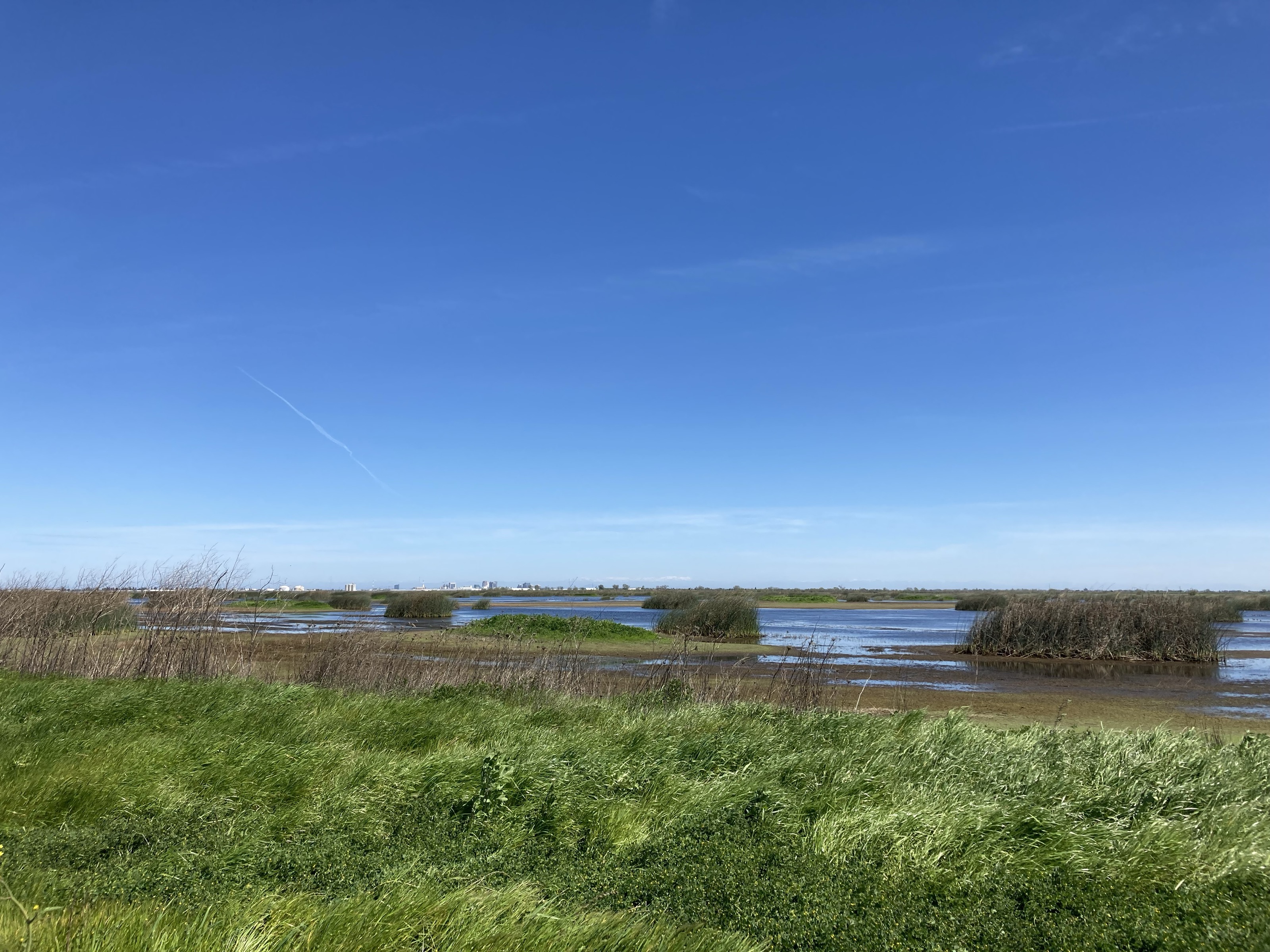
Seasonal wetlands in Yolo Bypass Wildlife Area, California, USA

Terrestrial Support of Aquatic Food Webs

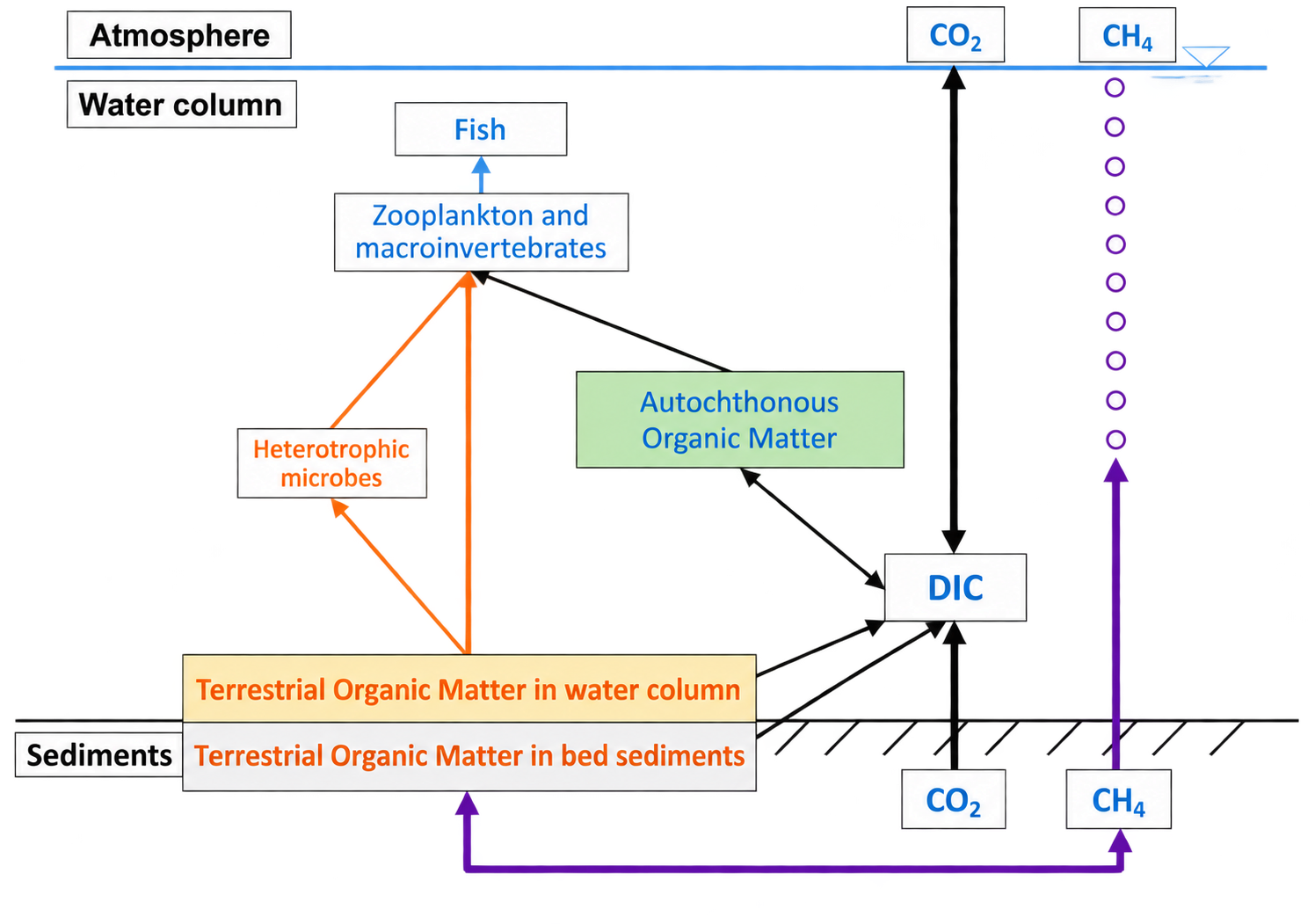
Terrestrial and aquatic ecosystems are interconnected. Terrestrial detritus (t-OM) supports aquatic food webs through consumers that forage on detritus. Our study evaluates the importance of a second terrestrial carbon pathway in which algae assimilate a substantial amount of dissolved inorganic carbon (DIC) released from the mineralization and methanogenesis of t-OM, supporting biodiverse wetlands.

Despite this, most CO₂ and CH₄ from t-OM decomposition are emitted to the atmosphere, suggesting the dual roles of t-OM in simultaneously supporting aquatic food webs and contributing to carbon emissions.