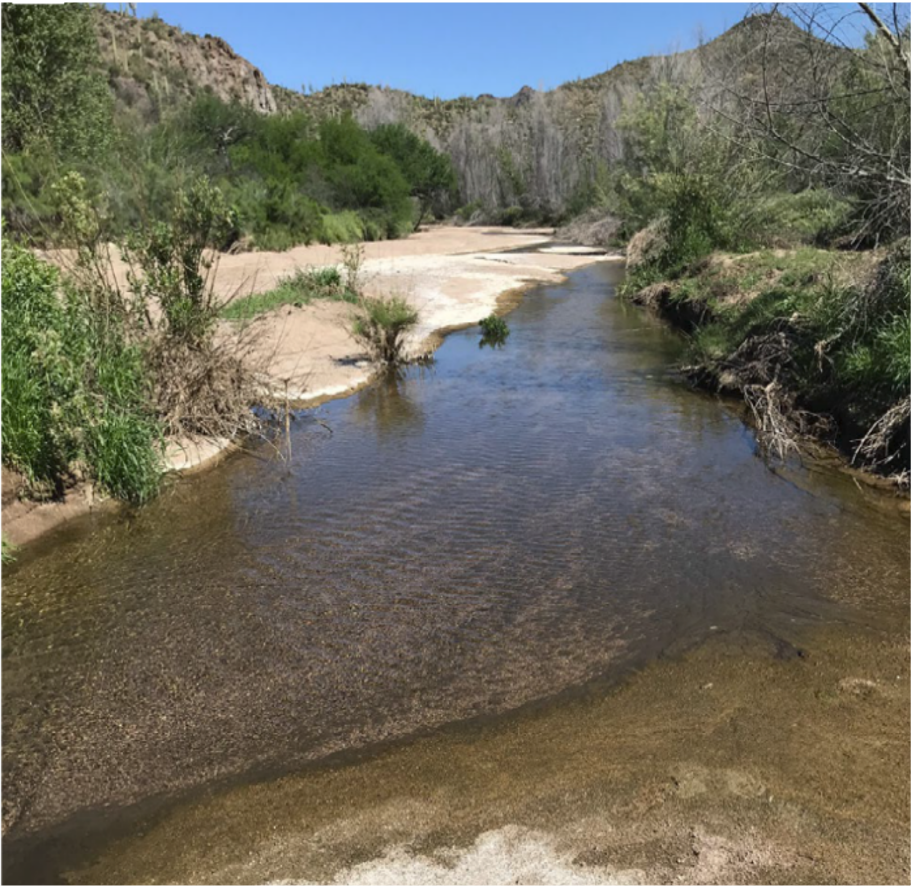
Sycamore Creek flowing through an arid landscape in Arizona Illustrations of stream macroinvertebrates
Sycamore Creek · Arizona, USA

Biodiversity–Stability Relationships

While natural ecological communities can maintain stability through various mechanisms, little is known about how climate change might alter the effectiveness of these mechanisms and their consequences for ecosystem functions and services.

Using four-decade observations of macroinvertebrate community in a desert stream, our study shows that the mechanisms historically governing community stability may be largely weakened as climate changes. Some may even flip to a destabilizing force and drive ecological communities to a state of much lower stability and higher sensitivity to environmental fluctuations.
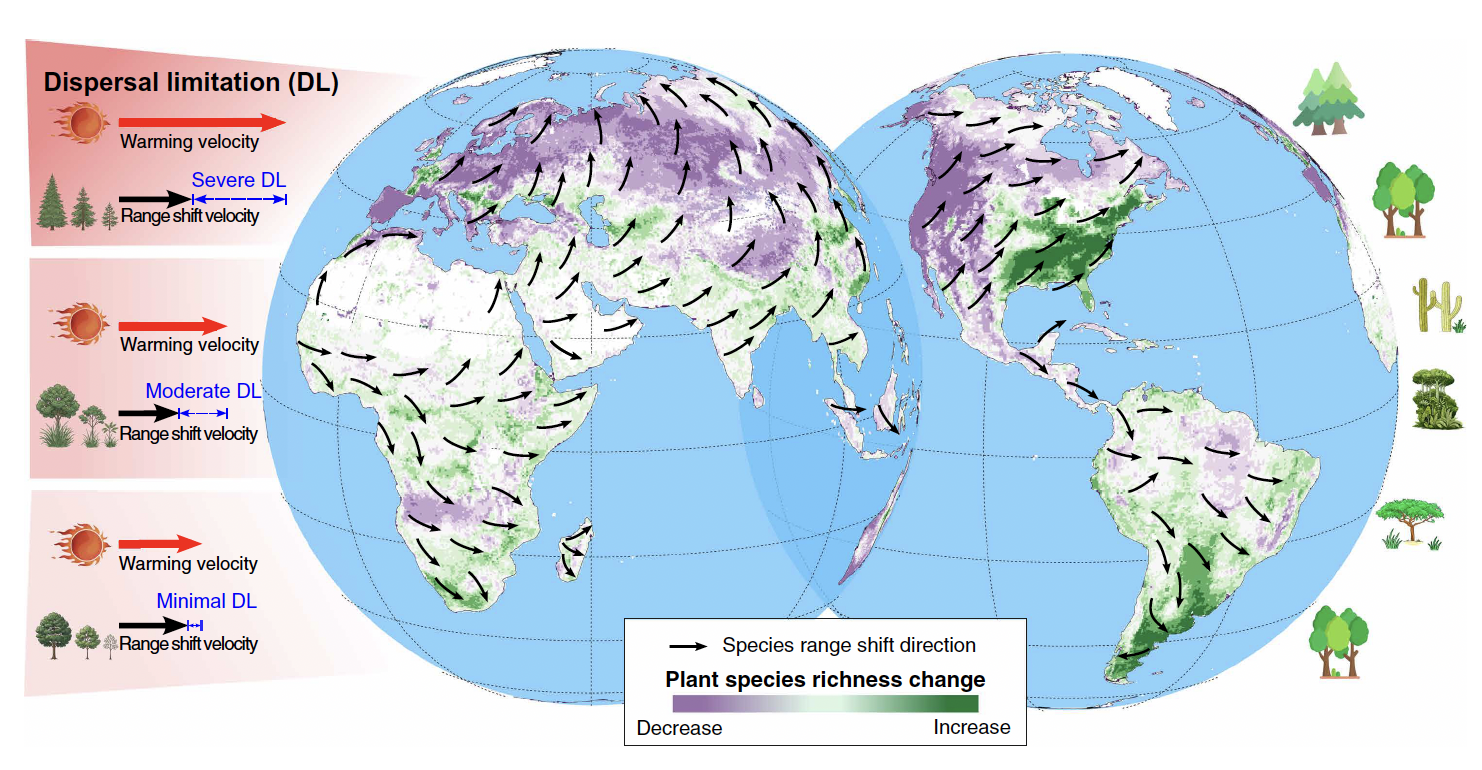
Global projections of plant range-shift directions, dispersal limitation, and changes in plant species richness
Future climate-driven plant range shifts and consequences for global species diversity redistribution. From Wang et al. Science, 2026.

Plant Range Shifts and Diversity Redistribution

We integrate species-specific range shift velocities into species distribution models to project distributions of 67,664 plant species (18% of global flora) for 2081–2100. Across emissions scenarios, 7–16% of species are projected to lose more than 90% of their range, placing them at high risk of extinction.

Climate-induced habitat loss, rather than dispersal limitation, drives these losses. Range shifts may sustain local richness—projected to increase across 28% of Earth’s land—but offer little relief from global extinctions.